in SAP S/4HANA
With the introduction of SAP S/4HANA, the Material Ledger has taken on new strategic importance. While it was often used as an optional feature in ECC, in S/4HANA it forms the technical and business foundation for valuation, multi-currency support, and actual costing. The goal of actual costing is to avoid relying on planned or standardized costs at the end of the period, but rather to allocate the actual production costs incurred in full and transparently to materials, inventory, and consumption. Especially in manufacturing companies with complex value chains, actual costing is thus a key tool for controlling and accounting.
Never miss another update
Material Ledger as an Integral Part of S/4HANA
In SAP S/4HANA, the Material Ledger is no longer an optional add-on module; it is mandatory. It is deeply integrated into the simplified data model and fully linked to the Universal Journal. The traditional, separate Material Ledger tables from ECC no longer exist; all relevant information is maintained in ACDOCA. This enables a unified view of financial and cost accounting. At the same time, the Material Ledger forms the basis for parallel valuation in multiple currencies as well as for performing actual cost calculations.
👉 No S/4HANA system can run without the Material Ledger activated.
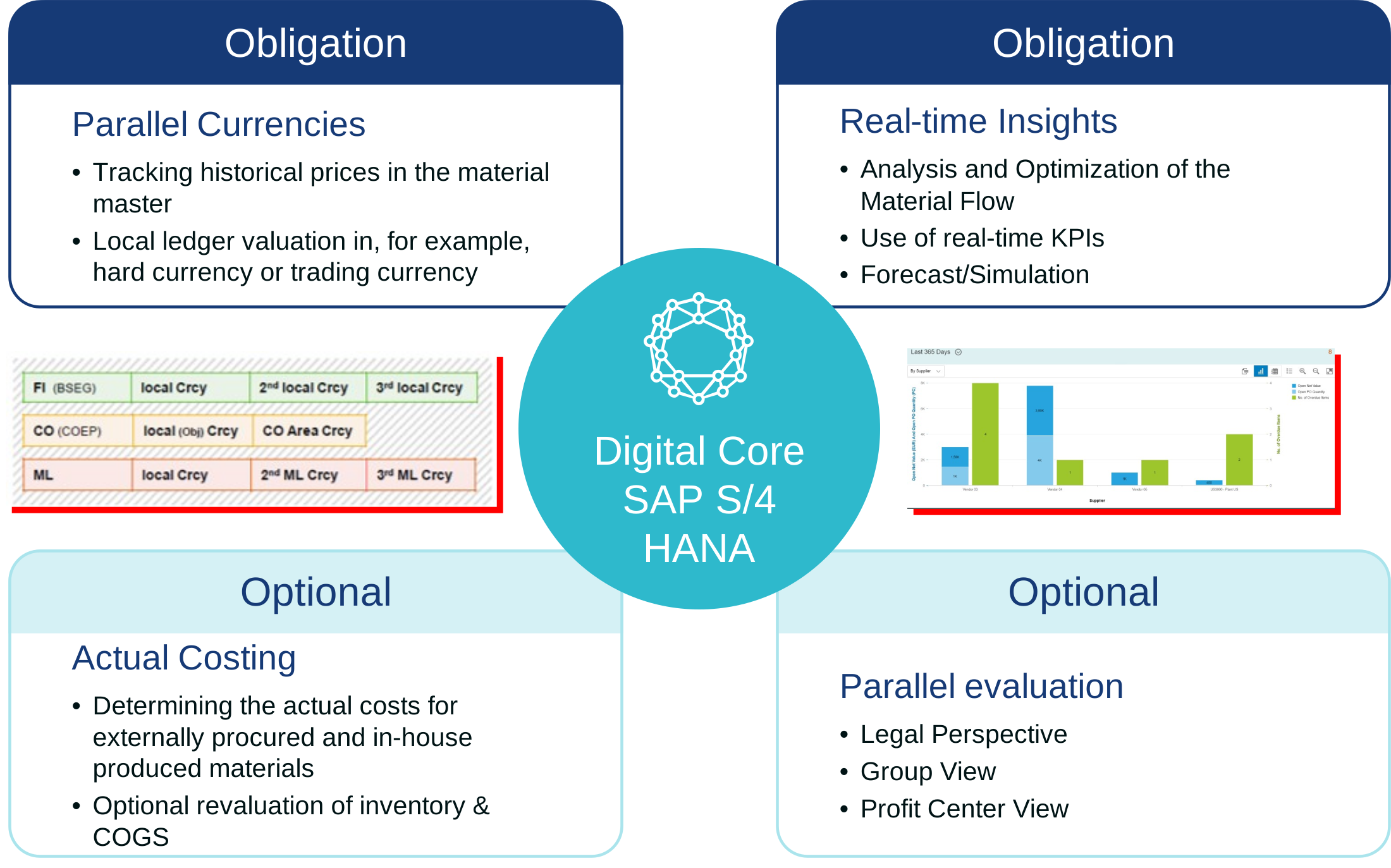
The Concept of Actual Costing in S/4HANA
Actual costing aims to systematically record all variances incurred during a period and allocate them to the materials that caused them. These include purchasing variances, production variances, overhead variances, and—in the case of multi-currency accounting—exchange rate differences. These variances are not considered in isolation but are passed down through the entire production structure in multiple stages, so that the actual cost of a finished product is composed of the actual costs of all preceding stages. The result is a periodic transfer price (PuP) that accurately reflects the actual cost of goods sold (COGS).
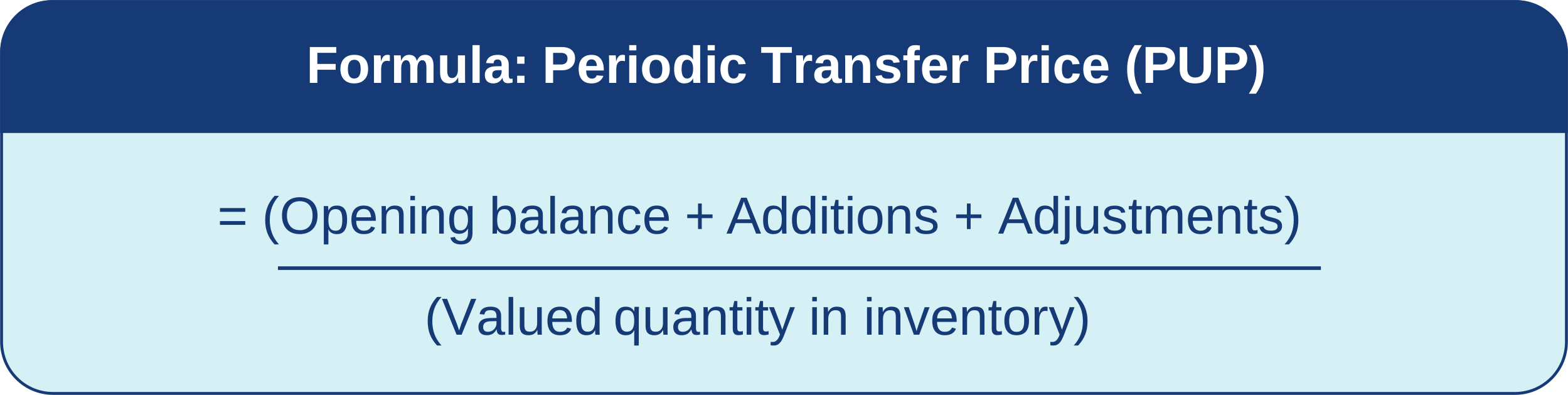
Requirements for Actual Costing
To ensure that actual costing can be performed correctly in SAP S/4HANA, certain business and technical prerequisites must be met. The key prerequisite is:
Valuing materials using standard prices, as this is the only way to accurately determine and allocate variances.
Actual Costing must be activated in Material Ledger Customizing
Closed prior periods (MM, FI, CO)
All relevant postings in Purchasing, Production, Controlling, and Financial Accounting must be complete and posted to the correct period.
Strict closing discipline is crucial, as actual costing is based directly on the actual costs posted in the system.


Thanks to CONSILIO, we were able to establish a globally standardized controlling framework at our largest European locations and successfully harmonize our CO processes and master data.
Process for Actual Costing During Period-End Closing
The actual actual cost calculation process takes place as part of the periodic closing using transaction CKMLCP. First, all variances that occurred during the period are collected and assigned to the respective materials. In the first step, these variances are allocated in a single stage to the consumption and inventory of the respective material. This is followed by a multi-level roll-down, in which variances from raw materials and semifinished goods are passed on to the subsequent production stages. The result of this process is the periodic actual price, which ensures a realistic valuation of inventories and a cost allocation based on causation, without changing the standard price for the current period.
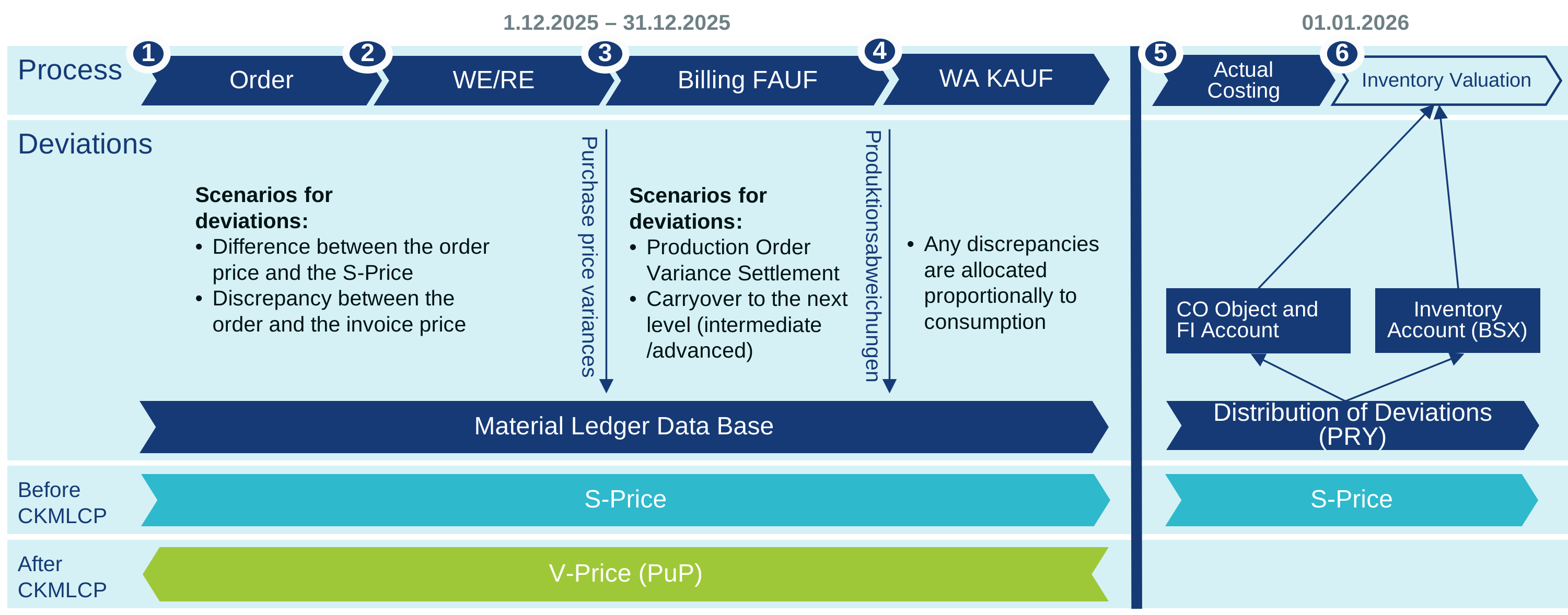
Data Model and Reporting in S/4HANA
A key advantage of S/4HANA is its simplified data model. Actual costing directly accesses the data stored in the Universal Journal, eliminating the need for redundant tables and aggregations. This not only enables higher performance but also significantly more flexible reporting. Analyses of actual prices, variances, and cost structures can be performed in real time using Fiori apps, CDS views, or embedded analytics. This provides Controlling and Finance with a unified and consistent data foundation for evaluations and decision-making.
Benefits of Actual Costing in S/4HANA
- Real-time Calculation on HANA: Actual prices and variances are calculated directly from the Universal Journal, enabling rapid analysis even with large volumes of data.
- High Transparency Regarding Variances: All cost variances are allocated to materials and production stages based on their cause, making the reasons for cost differences clearly traceable.
- Multi-currency valuation without additional effort: Actual cost calculations can be performed simultaneously in multiple currencies, with exchange rate differences automatically taken into account.
- Simplified data model: Because all relevant cost and posting information is stored centrally in ACDOCA, there is no need to maintain separate ledger tables, which simplifies analysis and evaluation.
- Seamless integration of FI, CO, MM, and PP: Postings from Purchasing, Production, Controlling, and Finance are automatically incorporated into actual cost accounting, ensuring a consistent and error-free period-end closing.
Challenges and Best Practices
Despite the technical advantages, implementing actual costing presents certain challenges. The transition from moving average prices to standard prices, the adaptation of existing closing processes, and the increased need for coordination between FI, CO, MM, and PP require careful planning. A phased approach with clearly defined closing processes, test data, and early involvement of the business units has proven effective. Particularly in S/4HANA transformations, actual costing should not be viewed as an afterthought but rather as an integral part of the target state.
Similarly, customers using SAP S/4HANA Cloud Public Edition (SAP Cloud ERP) 2408 face new challenges: The previous “Period-End Closing – Plant” solution (Scope Item BEI) is being discontinued. As a replacement, SAP is introducing transaction-based manufacturing cost posting (Scope Item 3F0). It enables real-time transparency for production orders and supports both product costing and parallel valuation in accordance with corporate and local accounting regulations—for efficient and modern production accounting.

With actual costing, companies can use SAP S/4HANA to determine actual production costs, allocate variances to materials and inventory based on their source, and thus obtain transparent actual prices for controlling and financial reporting.
Conclusion
Actual costing in the SAP S/4HANA Material Ledger is much more than just a technical function. It serves as a key tool for mapping actual production costs and integrates Controlling, Logistics, and Financial Accounting into a unified cost model. Companies that consistently use actual costing not only gain transparency but also improve their ability to manage operations and the quality of their financial statements.