


In 2015, 197 countries, including Germany and the EU, agreed to limit global warming caused by human activity to well below two degrees Celsius and preferably below 1.5 degrees Celsius by the end of the century.
The EU has set itself the long-term goal of achieving net zero greenhouse gas emissions by 2050 and negative emissions in the following years. An interim target of a 40% - 55% reduction in emissions compared to 1990 levels has been set for 2030.

Greenhouse Gas Protocol
The Greenhouse Gas Protocol is a standard for the accounting of greenhouse gases. This corporate standard is a method that supports companies, governments and other organizations in measuring and transparently presenting their emissions. The Greenhouse Gas Protocol thus provides the basis for calculating and reducing greenhouse gas emissions.
The Greenhouse Gas Protocol is divided into three scopes:

Scope 1: direct greenhouse gas emissions
Scope 1 includes all direct emissions caused by a company's own activities. This relates in particular to emissions generated within the company location - for example through the use of fossil fuels. These include
- the combustion of natural gas in heating systems,
- the use of heating oil to generate heat
- and gasoline or diesel for company-owned vehicles.
These emissions are therefore caused directly by the consumption of primary energy sources within the company - and are therefore fully attributable to the company.
Scope 2: energy-related indirect greenhouse gas emissions
Scope 2 comprises indirect greenhouse gas emissions caused by a company's energy consumption - more precisely: by the generation of purchased energy, such as electricity or district heating, which is produced outside the company.
Typical sources of Scope 2 emissions are
- the consumption of electricity from the public grid,
- the use of district heating for the heating of buildings
- and the purchase of cooling or refrigeration energy for production or storage processes.
Although these emissions are not generated directly within the company, they are a direct result of the company's own energy consumption - and are therefore just as relevant for the carbon footprint.
Scope 3: other indirect greenhouse gas emissions
Scope 3 covers all indirect emissions that are related to a company's business activities but are not caused by its own or purchased energy.
These emissions occur along the value chain and are divided into upstream (e.g. at suppliers) and downstream (e.g. at customers or waste disposal service providers). The division into these two areas serves to improve traceability in sustainability reporting.
Typical examples of Scope 3 emissions are
- energy consumption in rented properties,
- the purchase of goods and services,
- transportation and delivery by external service providers,
- travel activities of employees
- and waste disposal or subsequent use of products sold.
As Scope 3 is by far the largest and most complex area, it often presents companies with particular challenges in terms of data collection and evaluation.
CO2 balancing and planning with the help of the Green Ledger
In order to meet the scopes of the Greenhouse Gas Protocol, companies need digital solutions that support them in recording environmental and emissions data in a precise, consistent and traceable manner. With the Green Ledger, SAP offers a solution that systematically integrates ecological key figures into the business system landscape and thus supports the scalability, standardization and trustworthiness of CO2 data throughout the entire supply chain.

In the first step, the relevant CO₂ data is recorded and aggregated on the basis of material movements and line item postings. This information is then assigned, validated and consolidated in a structured manner to create evaluable emissions balances. The result is an integrated Green Ledger dashboard that provides a transparent overview of the emissions impact across the entire company.
What makes the Green Ledger special is its deep integration into the business management system landscape. CO₂ and financial data are recorded together at transaction level, making it possible to link emissions directly to costs, sales and processes. This enables companies to analyze, reconcile and forecast Scope 1, 2 and 3 emissions in the context of financial key figures.
Standardization according to financial accounting principles ensures traceability and comparability. The Green Ledger is based on current regulatory requirements, in particular the Corporate Sustainability Reporting Directive (CSRD) and the standards of the International Sustainability Standards Board (ISSB). It therefore not only supports reporting, but also compliance and internal management.
A special added value: the CO₂ data can be visualized in tables and diagrams in order to use it strategically beyond the pure reporting obligation. This provides companies with a basis for identifying emission-intensive processes, defining climate targets and measuring progress.
The combination of ecological transparency and business management depth creates the basis for data-based decisions that reconcile sustainability and profitability - be it through cost reduction potential, increased sales or more sustainable value creation.

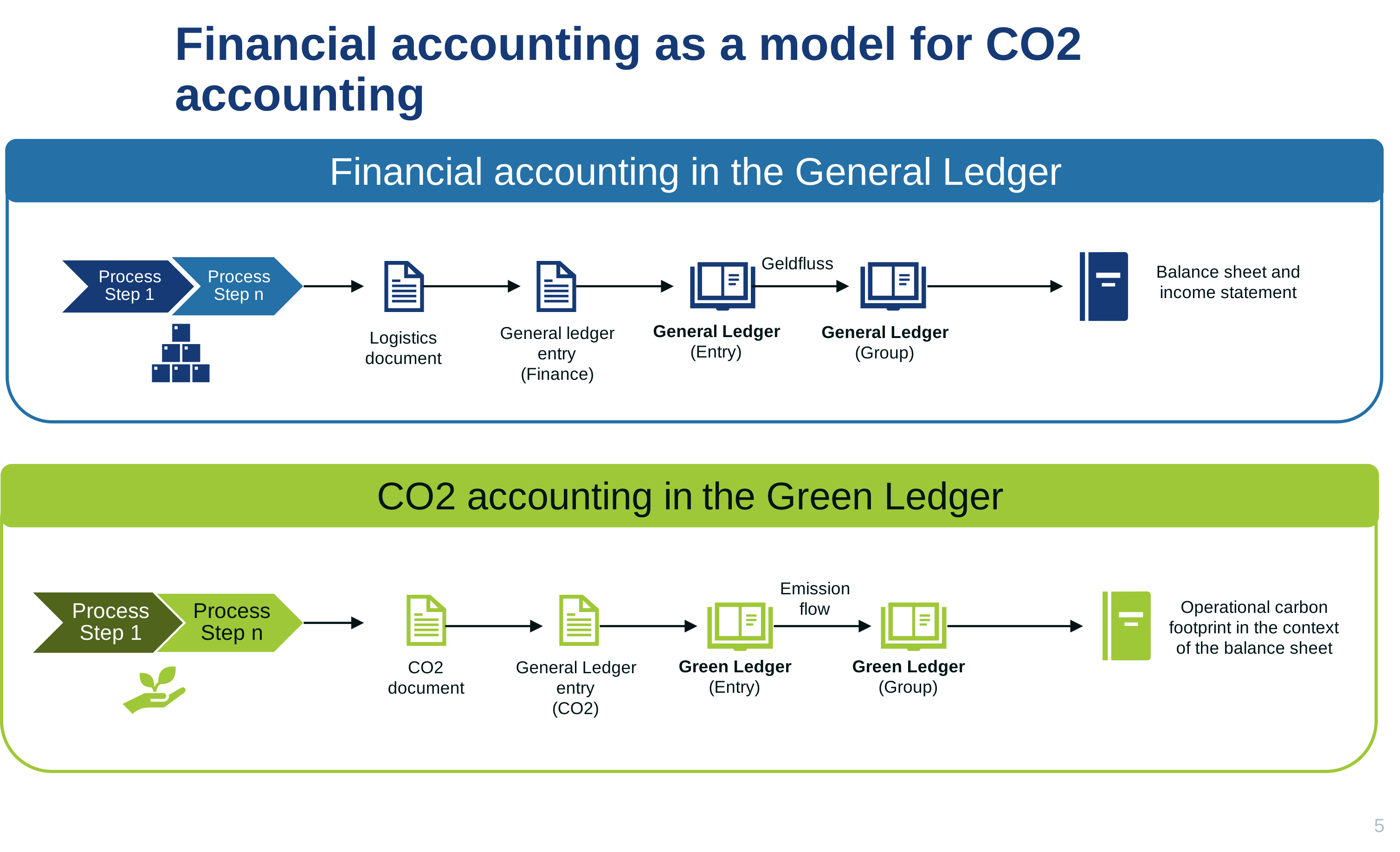
CO2 emissions are accounted for in the Green Ledger according to the same principle and process as in the general ledger for financial accounting (General Ledger). Here, too, there is a document that has recorded the emissions, which is then transferred to the general ledger, in this case the green ledger. This ultimately results in the green ledger having its own balance sheet, the carbon footprint. This carbon footprint can then be used for reporting purposes.

With the SAP Green Ledger, CO₂ emissions can be recorded, balanced and directly linked to financial key figures in a transparent and standardized way - the basis for sustainable and economically sound decisions.
Summary
The SAP Green Ledger offers companies an effective way of meeting the requirements of the Greenhouse Gas Protocol. CO2-relevant data is recorded directly during ongoing business operations and recorded and balanced alongside the financial key figures required to prepare the balance sheet. This means that CO2 accounting can be seamlessly integrated into existing processes and the creation of a sustainability report only requires additional effort.
In addition to the reporting obligation that some companies now have, the Green Ledger also supports companies in managing internal sustainability targets. This enables companies to track emissions transparently, derive measures and continuously adapt and develop their targets.

