in SAP Finance
Artificial intelligence is no longer just a distant buzzword—not even in the financial sector. More and more companies are already using AI-based approaches to make accounting processes more efficient and error-free. For example, intelligent systems assist with automatic document capture and posting, detect errors or discrepancies in the posting history, and provide forecasts for cash flow and revenue trends.
Yet even as the technology matures, there is still a noticeable degree of hesitation in many finance departments. “What if the system makes a mistake?” or “How much control am I actually giving up?” Questions like these show that trust in AI still needs to grow.
The good news: automation in SAP Finance doesn’t have to start with AI. Even the standard SAP S/4HANA offers numerous features that accelerate processes, reduce errors, and handle routine tasks—providing enormous relief without the need for in-house development or external AI solutions—fully integrated, secure, and transparent.
Never miss another update
Automation with the SAP Standard – Practical and Manageable
Automation is not the same as AI. The standard SAP system already includes a high degree of process intelligence.
Below is an overview of some key features that can be used to automate, standardize, and accelerate work steps in the SAP Finance area—without any “black box” AI.
1. Excel upload features – less manual data entry
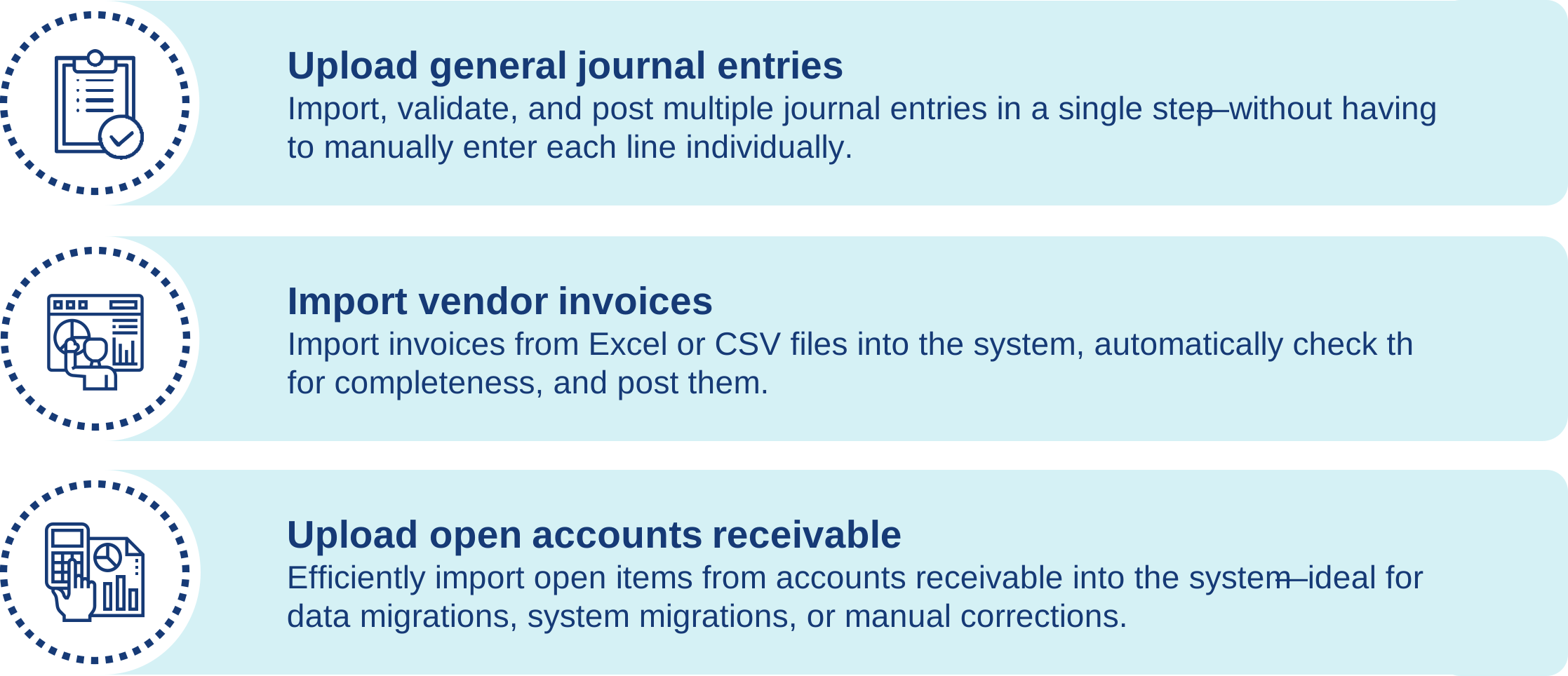
Whether journal entries, vendor invoices, or other financial data—many financial processes start in Excel: SAP’s S/4HANA standard offers options for uploading these entries directly into the system using templates provided by SAP.
This not only reduces typing errors but also saves a tremendous amount of time—especially for recurring entries or bulk processing.
Three apps are available in Financial Accounting—for general ledger documents, vendor invoices, and customer items. The corresponding upload template is directly integrated into each app.
2. FlexWorkflows – Manage approvals digitally and transparently
The approval process for accounting documents, purchase orders, or invoices is often a bottleneck. With FlexWorkflows in the standard SAP system, approval processes can be flexibly configured—without any additional development.
Invoices or accounting documents can be automatically forwarded to the appropriate person—for example, based on the amount, cost center, or company.
The workflow ensures traceability, standardization, and clear responsibilities, while the approval process remains digital and transparent.


Thanks to CONSILIO, we were able to establish a globally standardized controlling framework at our largest European locations and successfully harmonize our CO processes and master data.
3. Structured Transactions with the Closing Cockpit
Monthly and annual closings are often hectic. Deadlines, tasks, checklists—and many interdependencies. The SAP Closing Cockpit helps you
- plan, monitor, and automate closing activities
- centrally manage responsibilities and deadlines
- monitor progress and status in real time
Recurring tasks such as account reconciliations, data extractions, or reports can be executed in a standardized manner. Responsibilities and deadlines are clearly defined, and progress is visible in the system.
The result: a structured, audit-compliant, and faster closing process that frees up capacity for analysis and management.

4. Intercompany Matching & Reconciliation – No More Excel Reconciliations
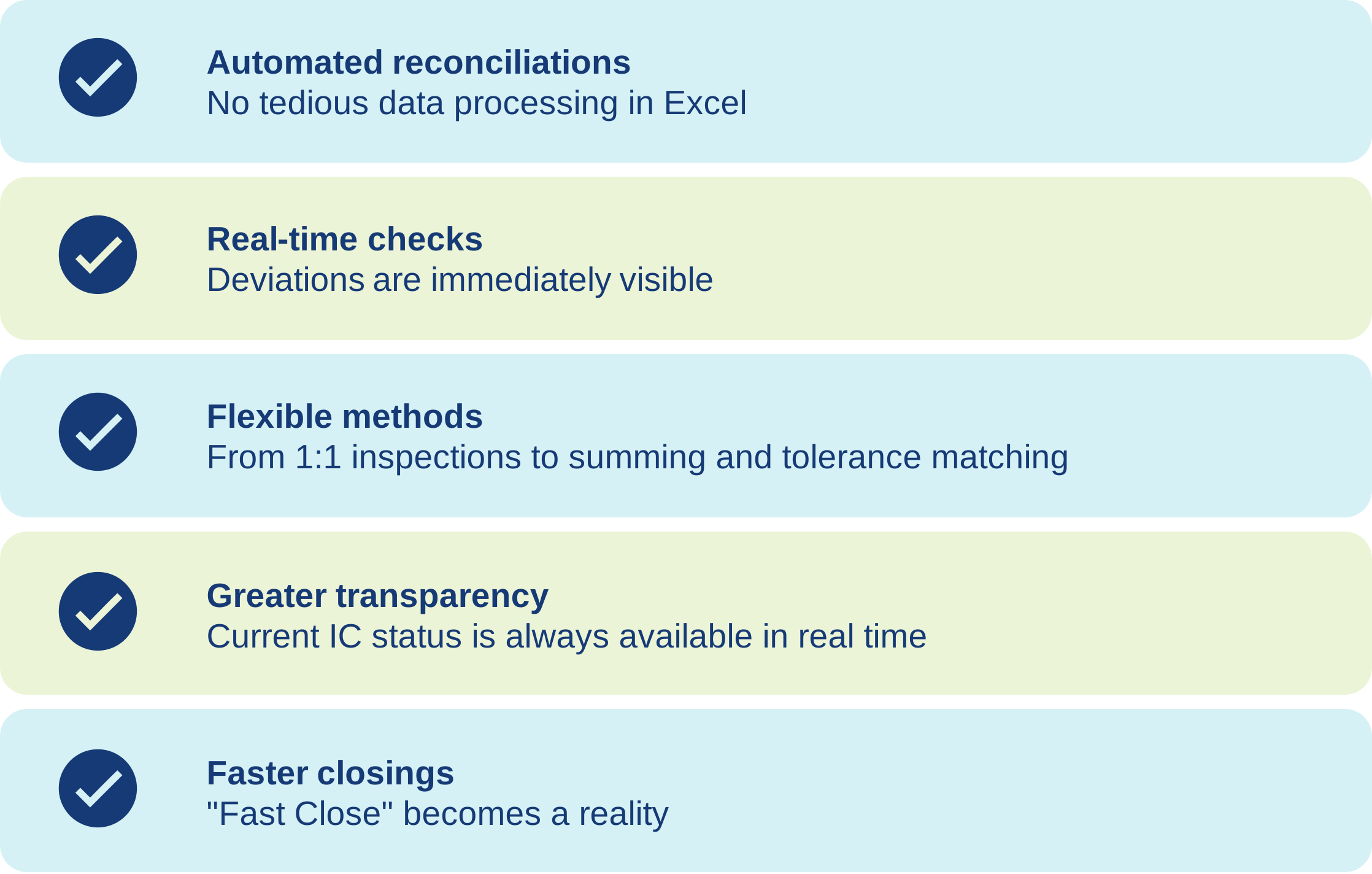
In corporate structures, reconciling transactions between companies is often a tedious process. Differences in posting dates or currency fluctuations can quickly lead to discrepancies.
With the Intercompany Matching & Reconciliation (ICMR) function in the standard S/4HANA system, intercompany transactions can be automatically reconciled and discrepancies identified using flexibly definable document validation rules.
Instead of laboriously exchanging Excel lists between companies, the reconciliation process runs directly within the system in a rule-based and traceable manner.
5. Analytics and Universal Journal – Data Intelligence Without AI
The Universal Journal forms the foundation of the modern SAP Finance architecture. It consolidates transactional data from finance and controlling into a single central data source—real-time data instead of data silos.
This structure enables automated analyses and evaluations directly within the system, without the need for external tools or complex AI models.
With the integrated SAP Analytics functions, finance managers gain clear, data-driven decision-making insights—from operational KPI monitoring to strategic forecasts.
Users can quickly and easily create their own evaluations using specific SAP Fiori apps via drag-and-drop, thereby accelerating decision-making processes.

Automation in SAP is not a risk, but the next logical step.
Summary
Automation in finance does not mean relinquishing control.
On the contrary: With S/4HANA, the SAP standard offers numerous features that automate repetitive tasks, reduce sources of error, and create transparency—all without the need for additional tools or complex implementations. By making strategic use of these built-in features, you lay the foundation for future AI-powered processes—secure, traceable, and with clearly measurable added value.